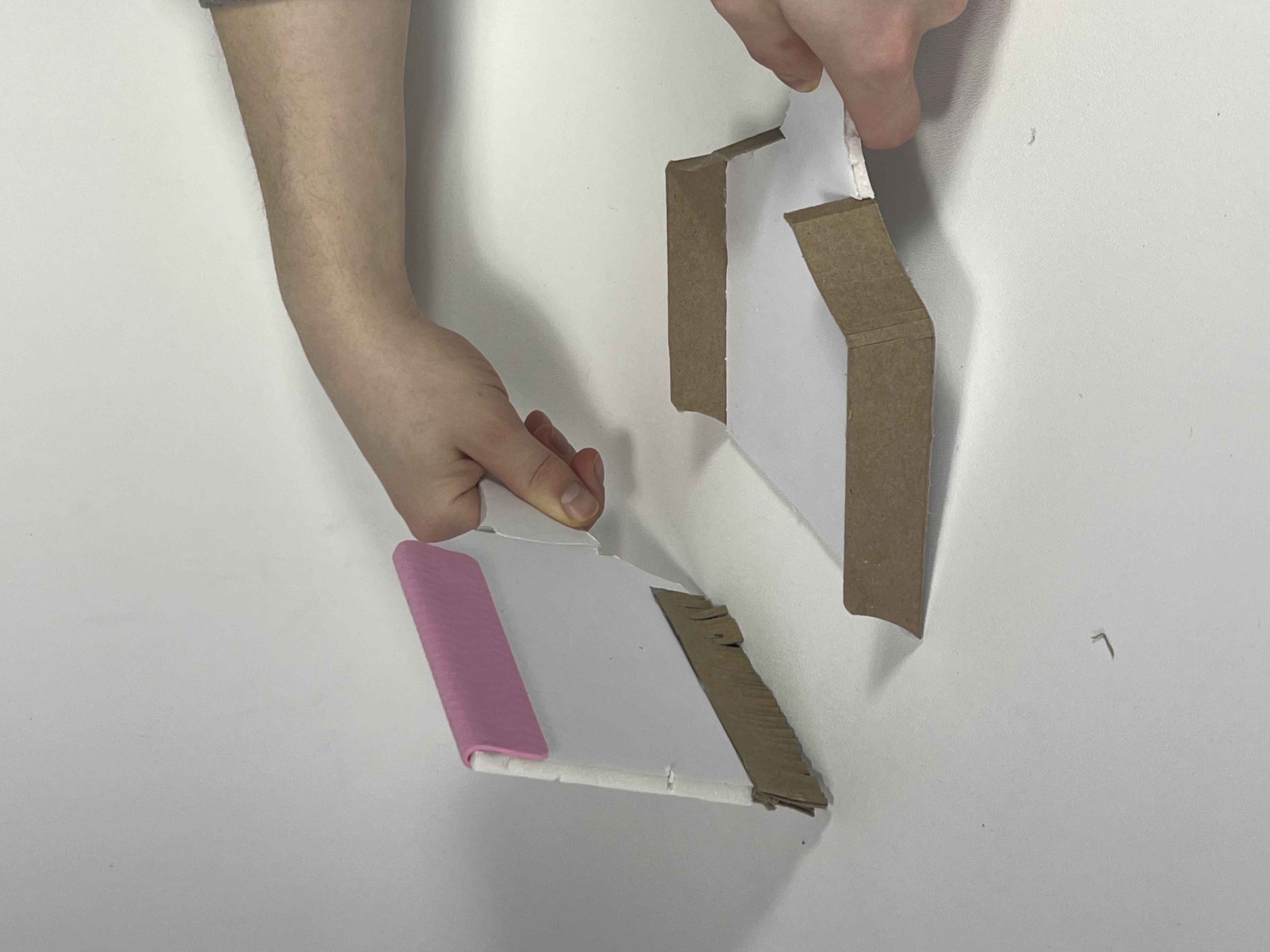
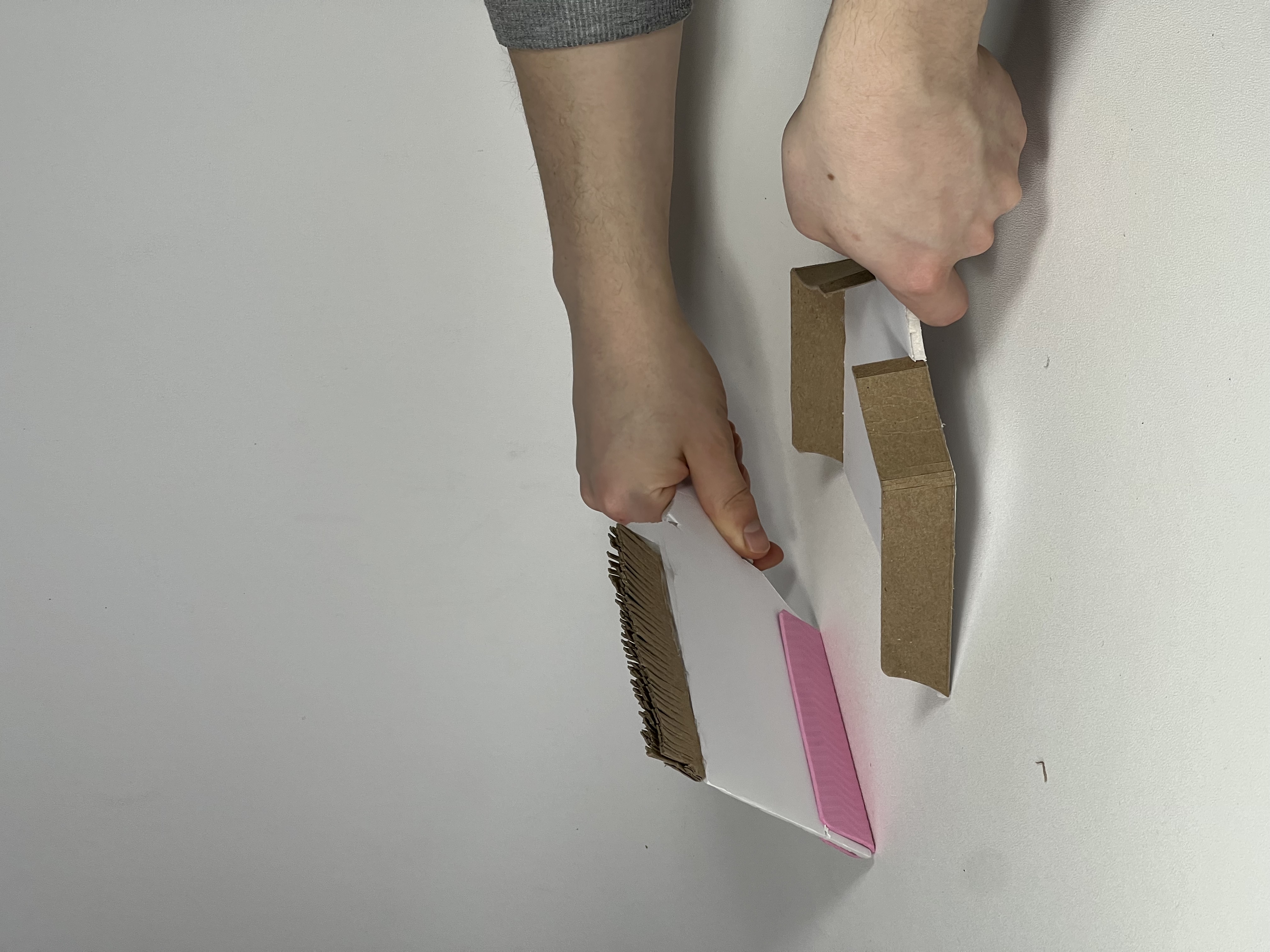
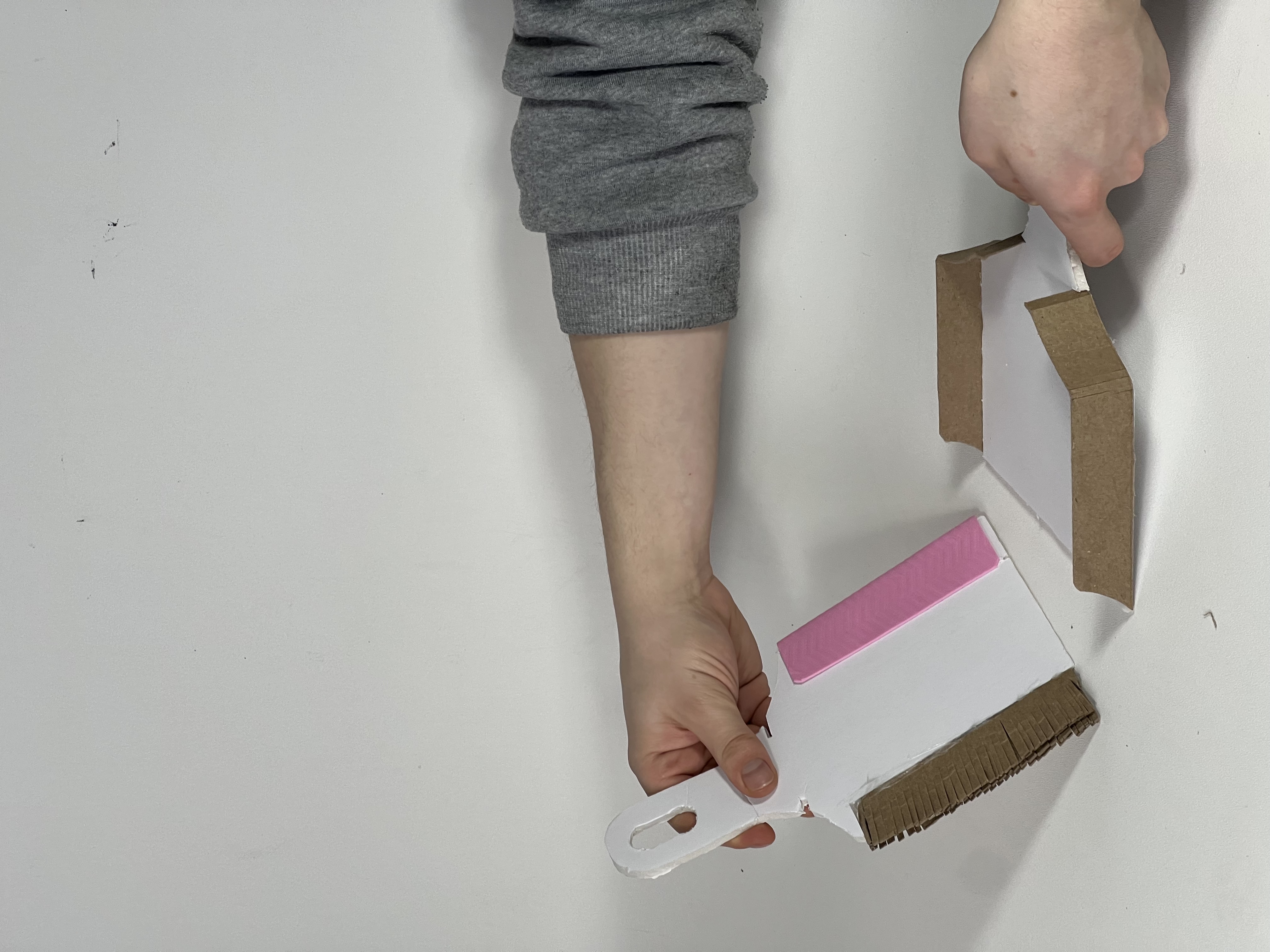
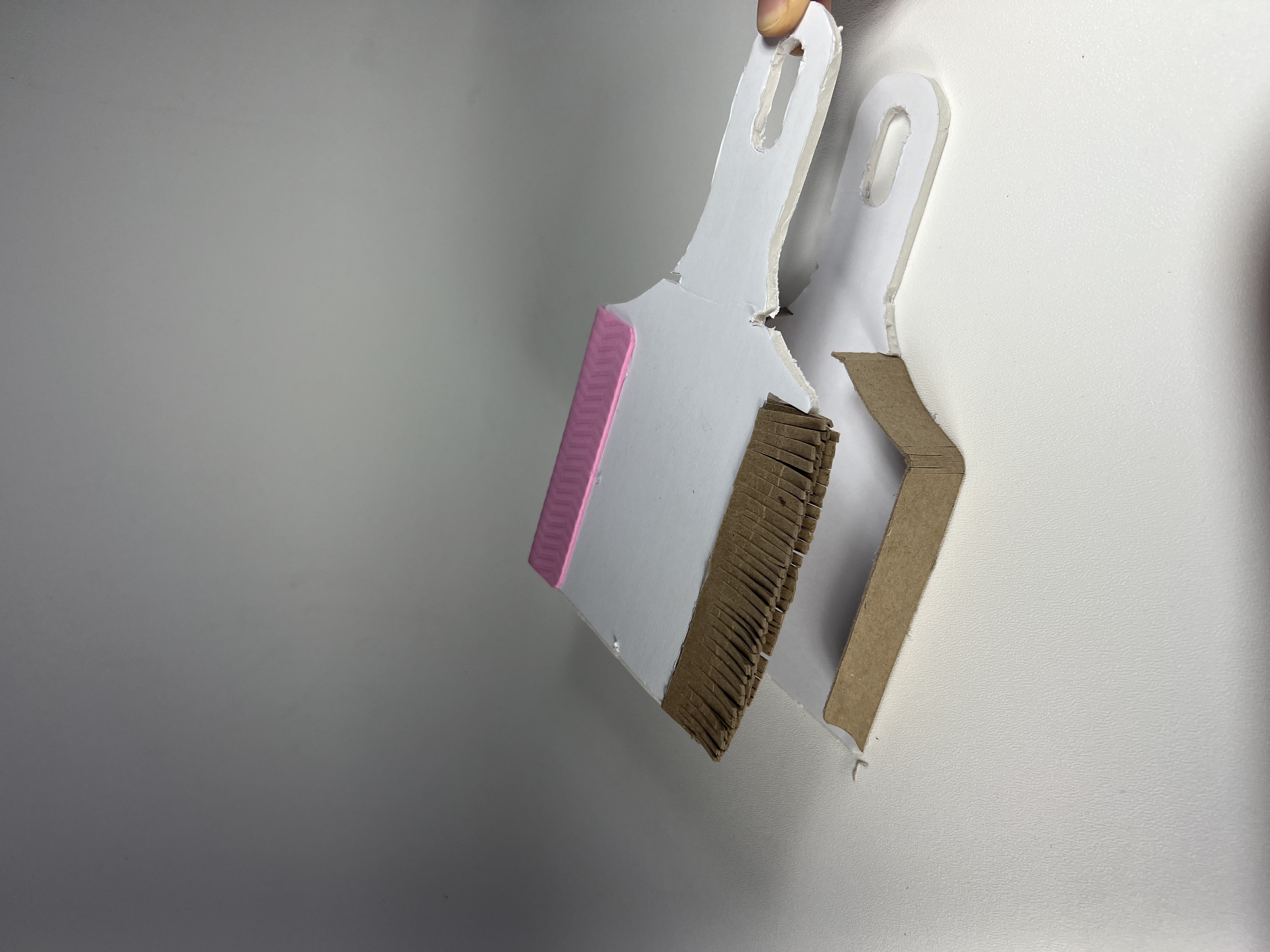
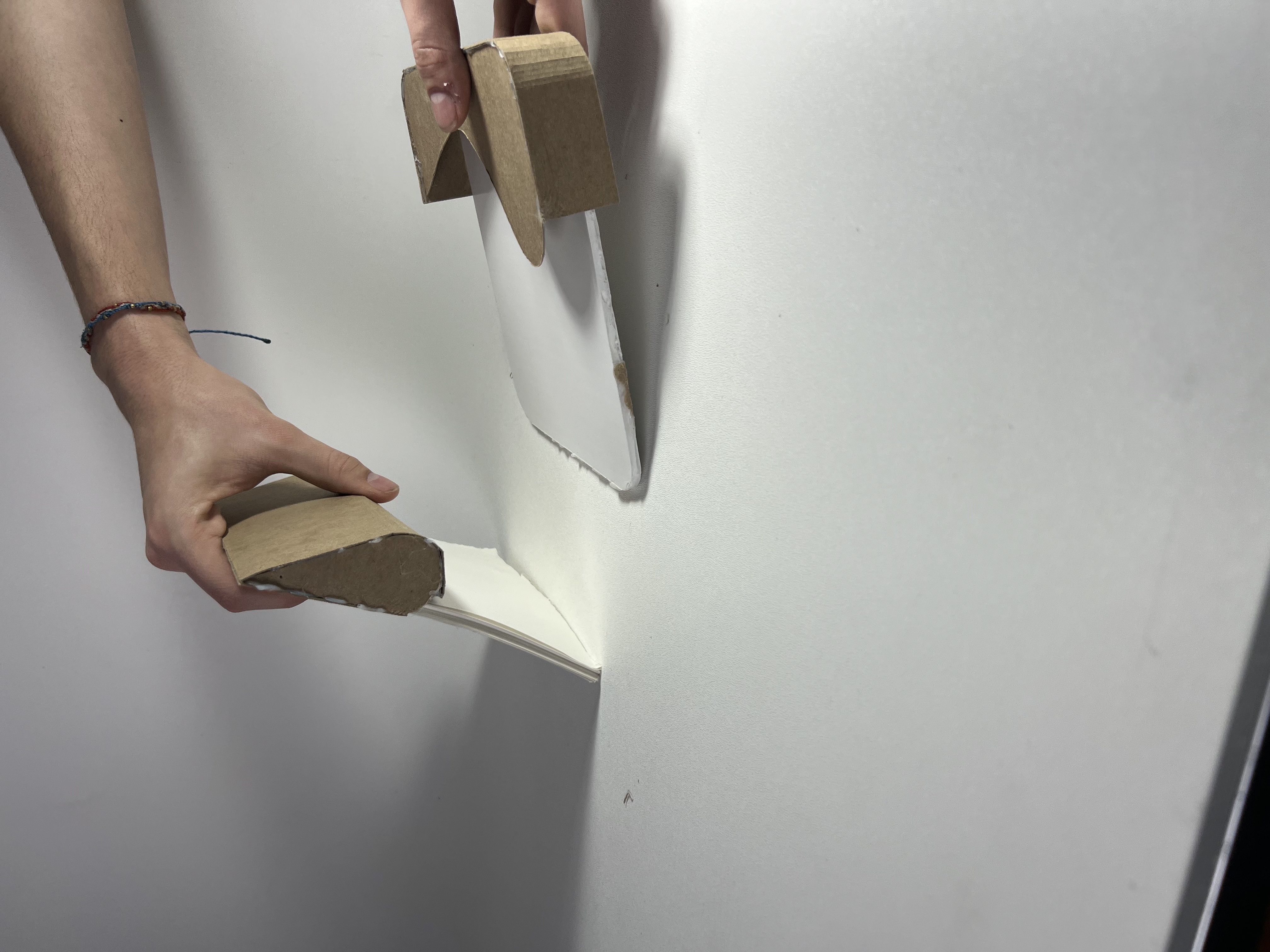
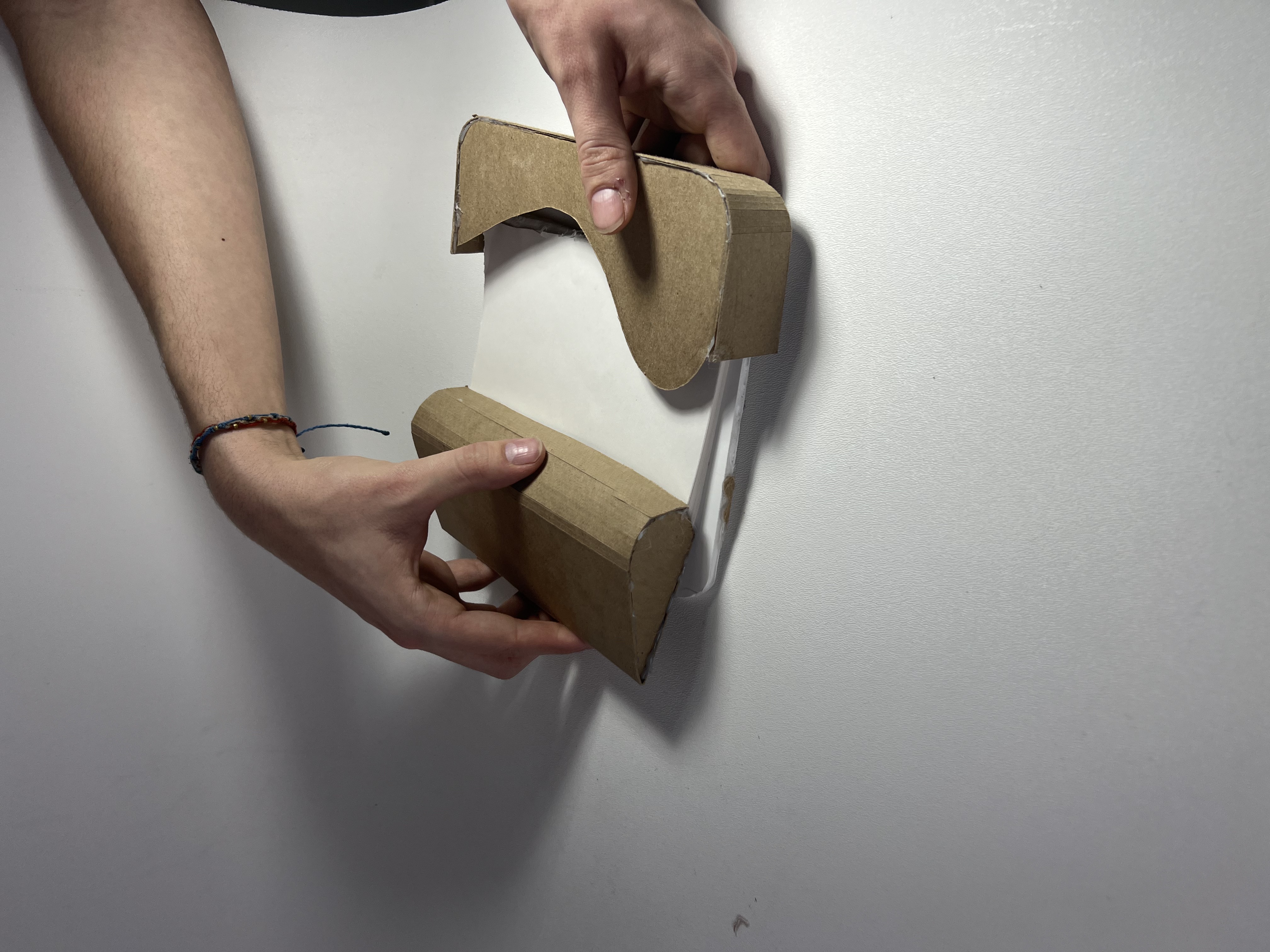
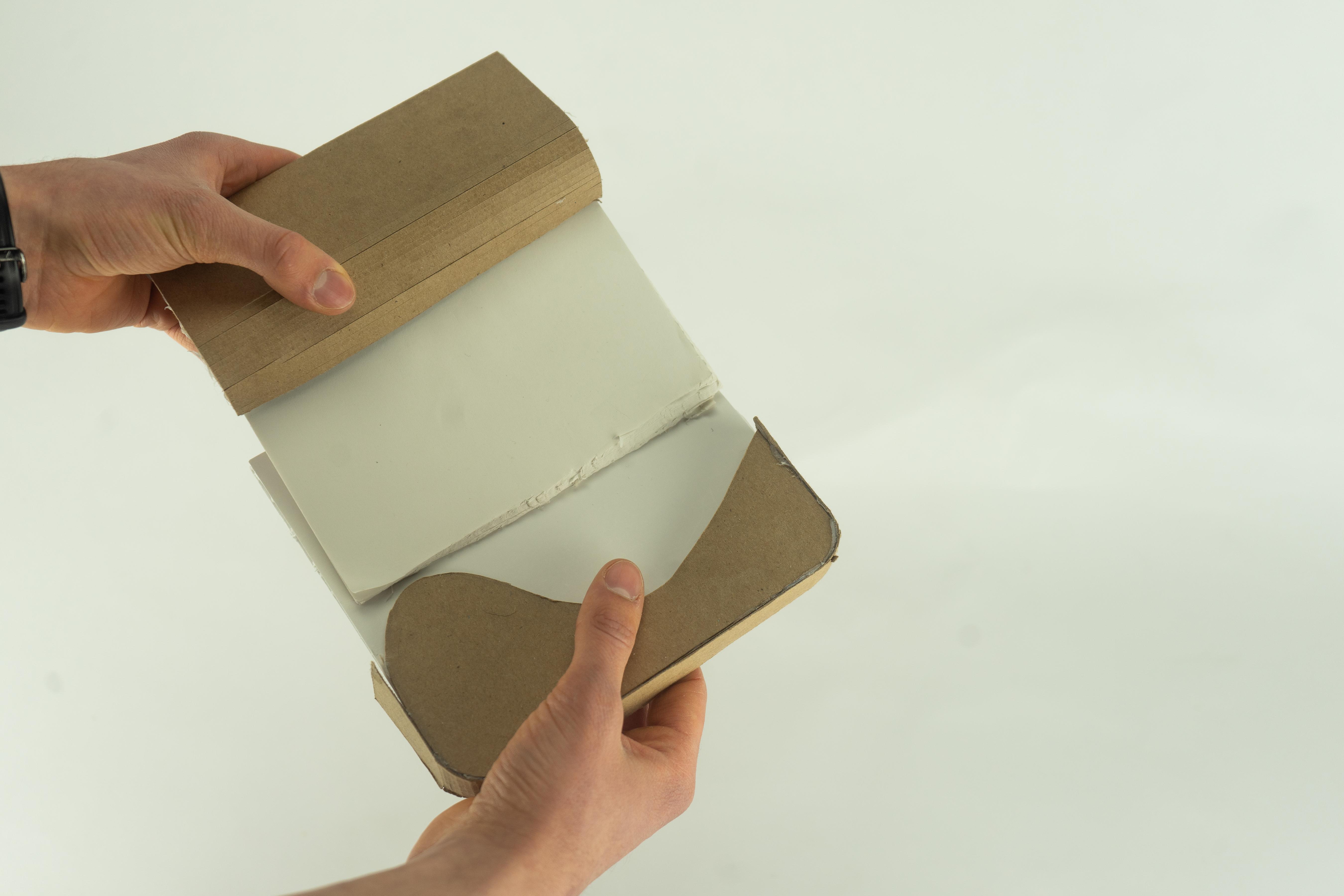
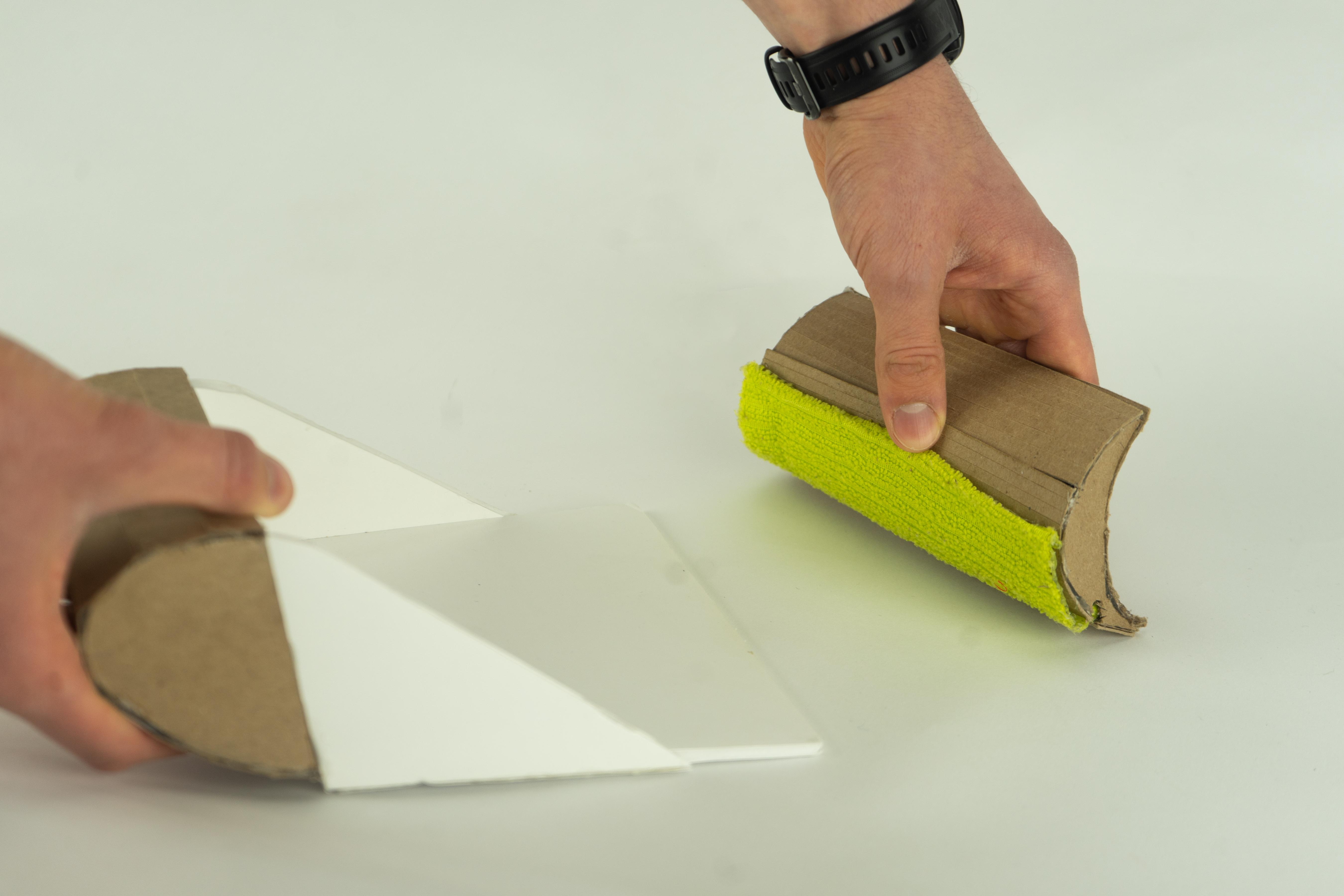
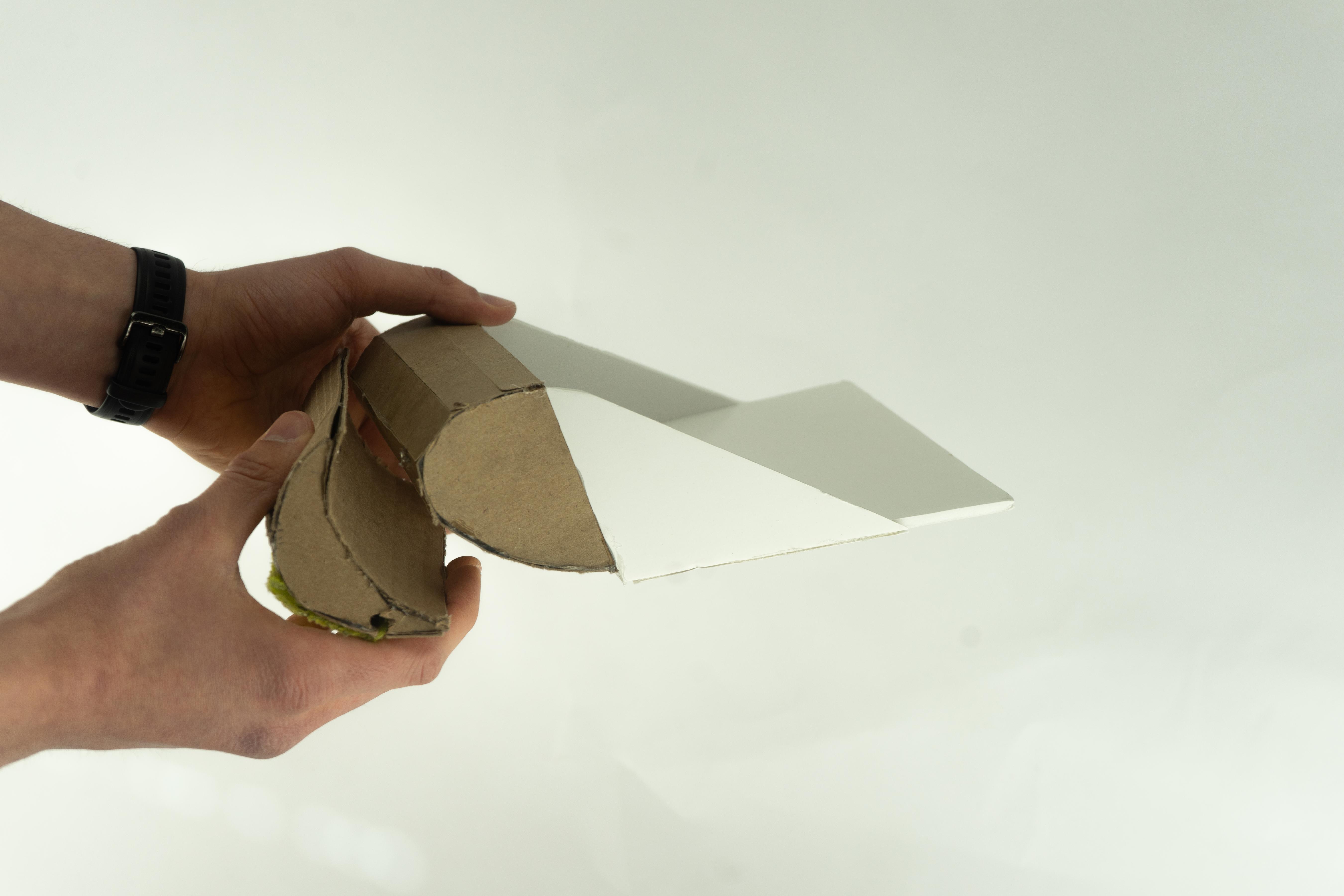
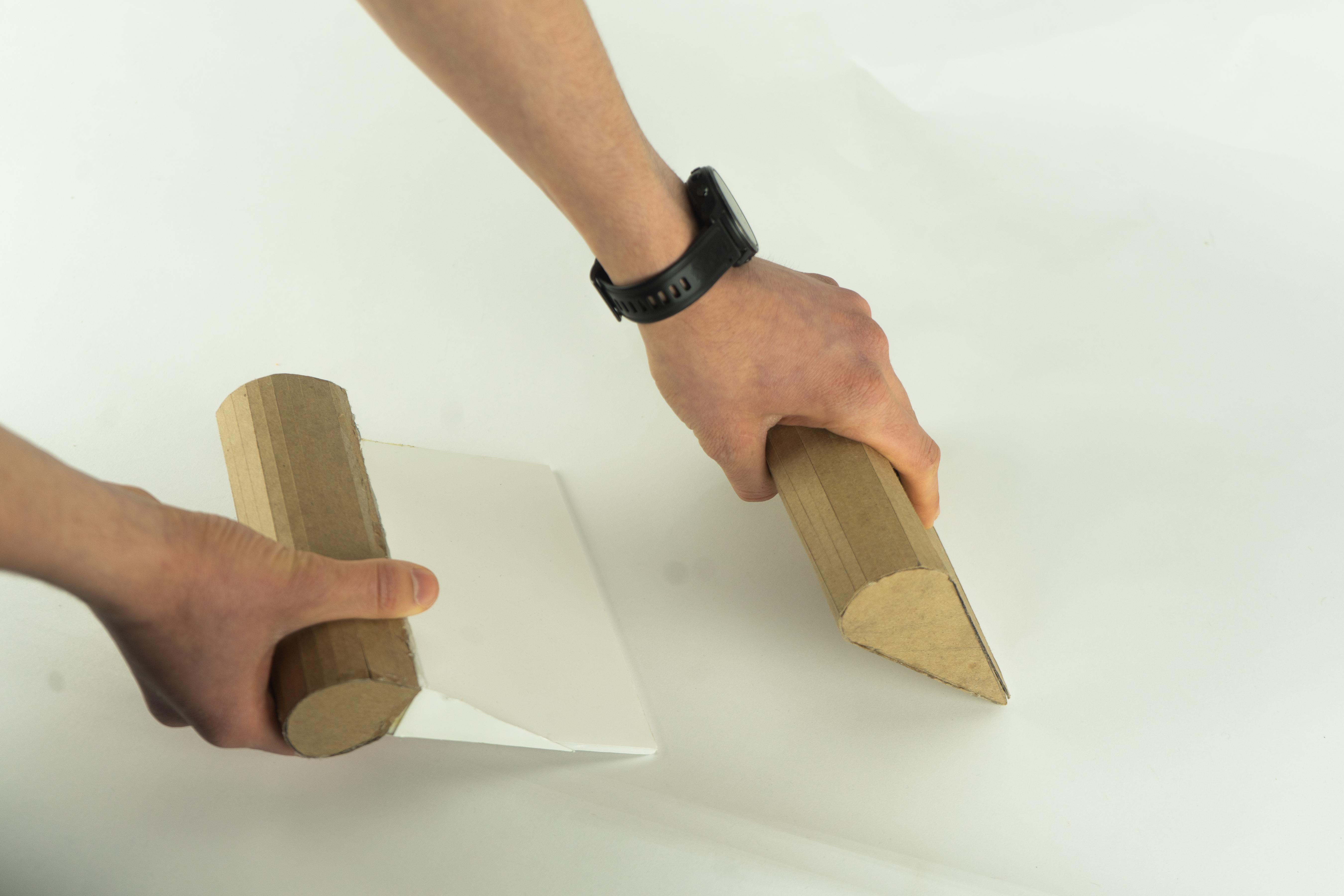
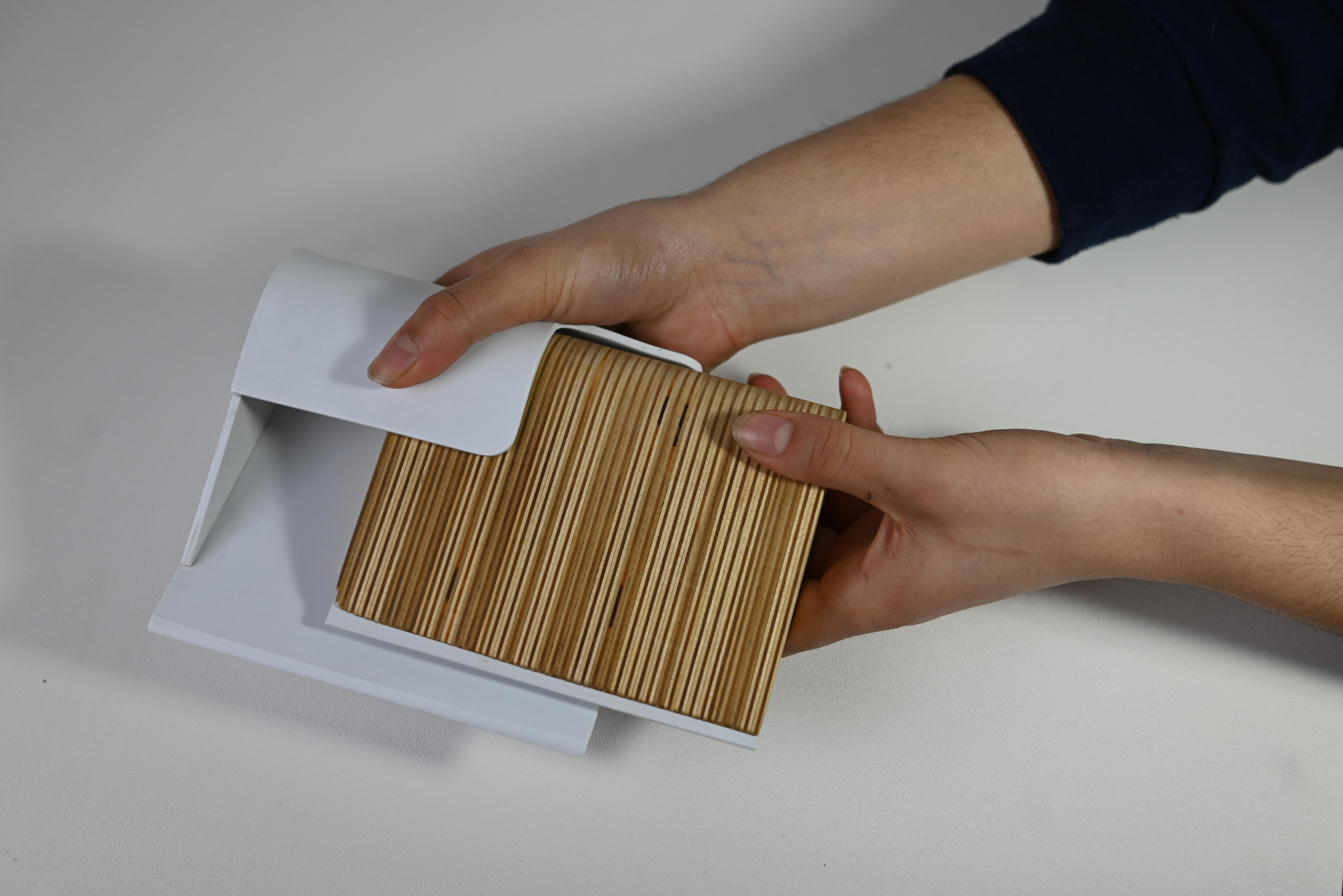
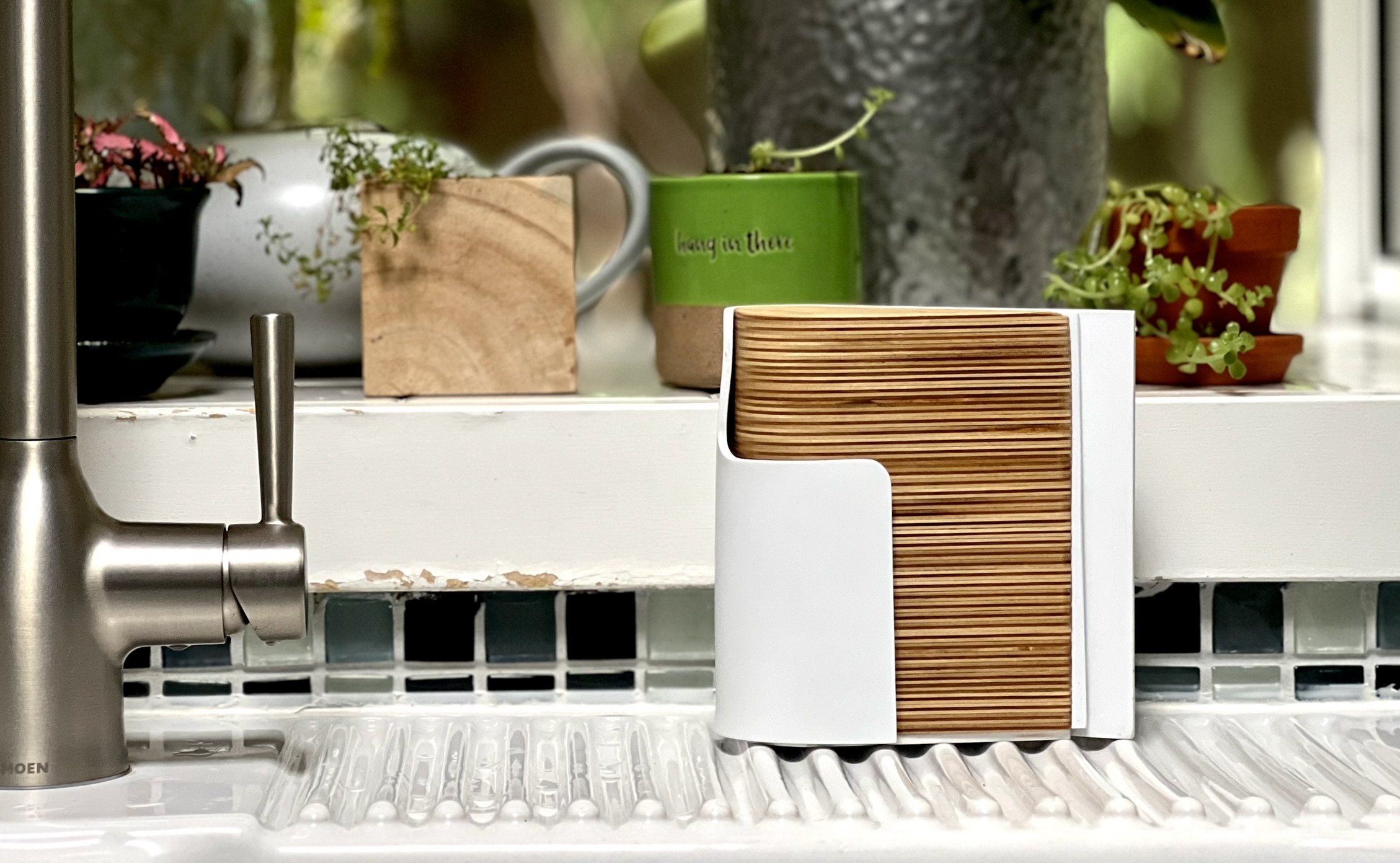
A countertop scraper and collector system exploring nesting geometry, material contrast, and cohesive form language.
Design a nested sweeping and collection system with a unified form language, constrained to sheet polystyrene and wood. The system must have nesting geometry, and emphasize material contrast and the relationship between two components that must function and store as a single system.
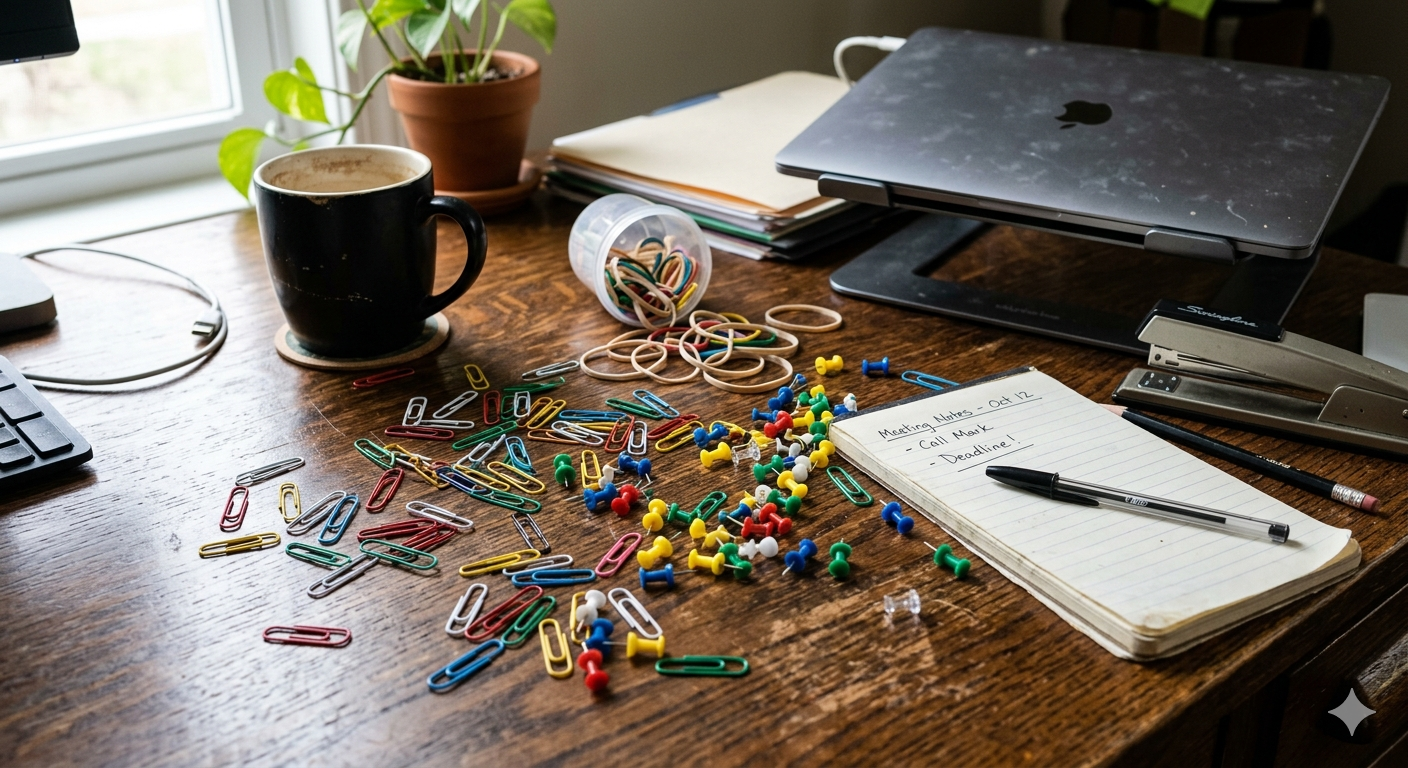
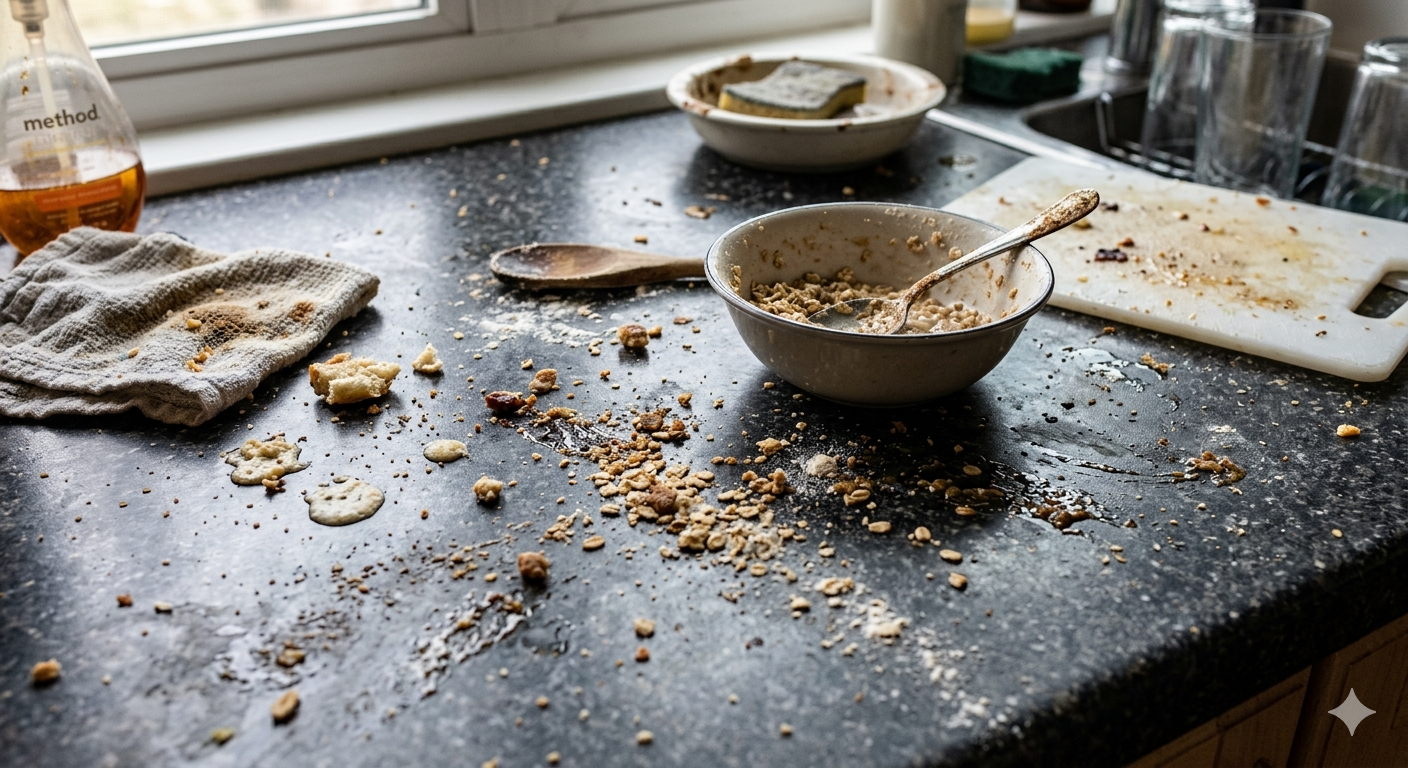
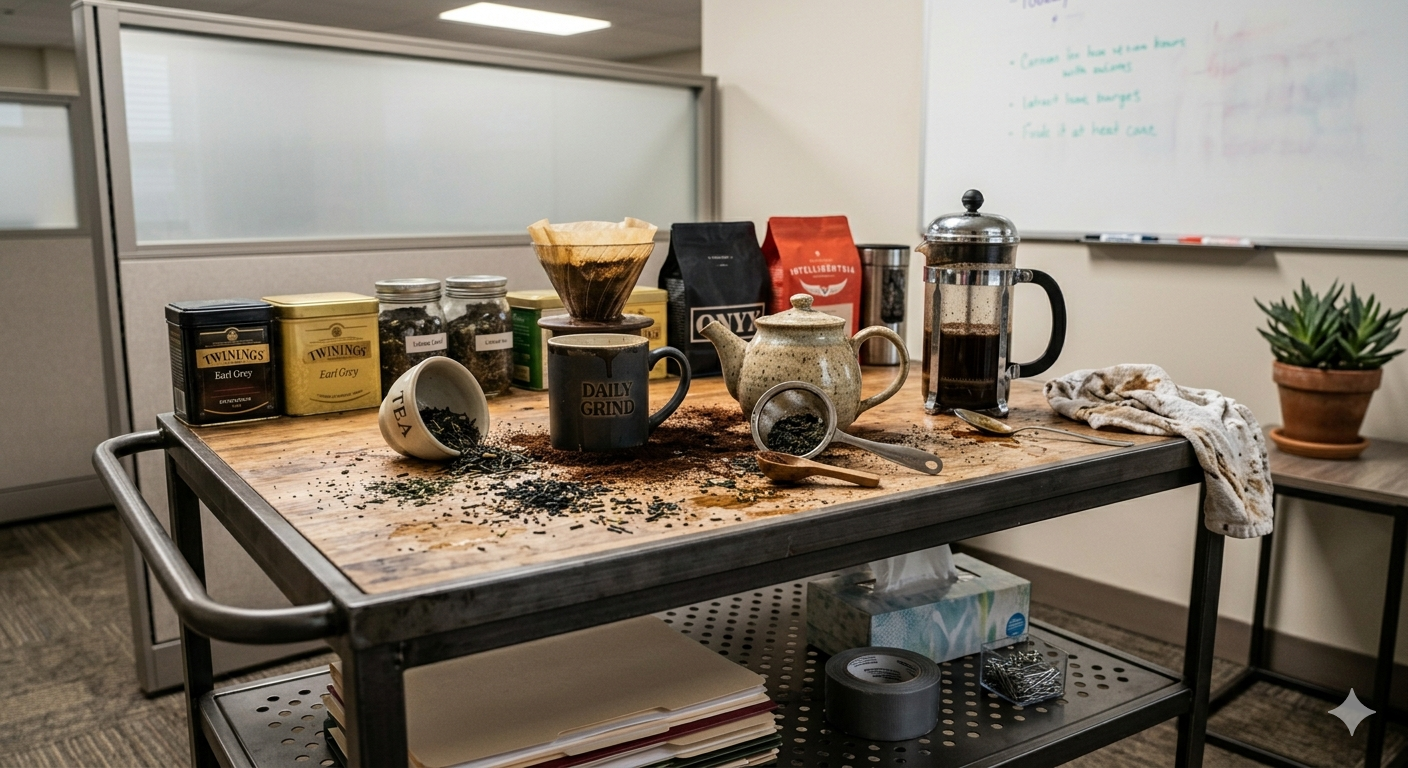
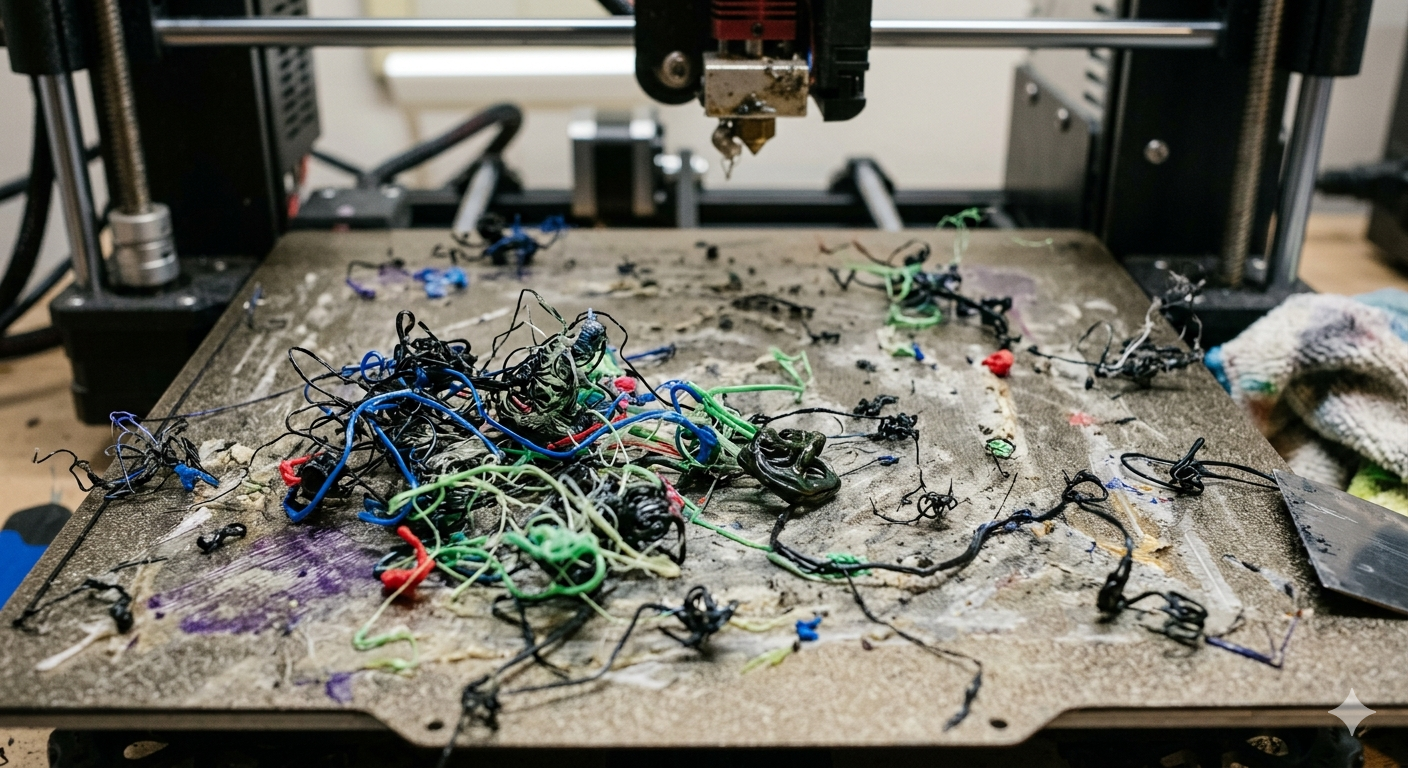
Mapping where debris accumulates and what tools currently exist to address it.
Surfaces
Workbench
Floors
Desks
Kitchen counters
Coffee / tea station
3D printer bed
Existing tools
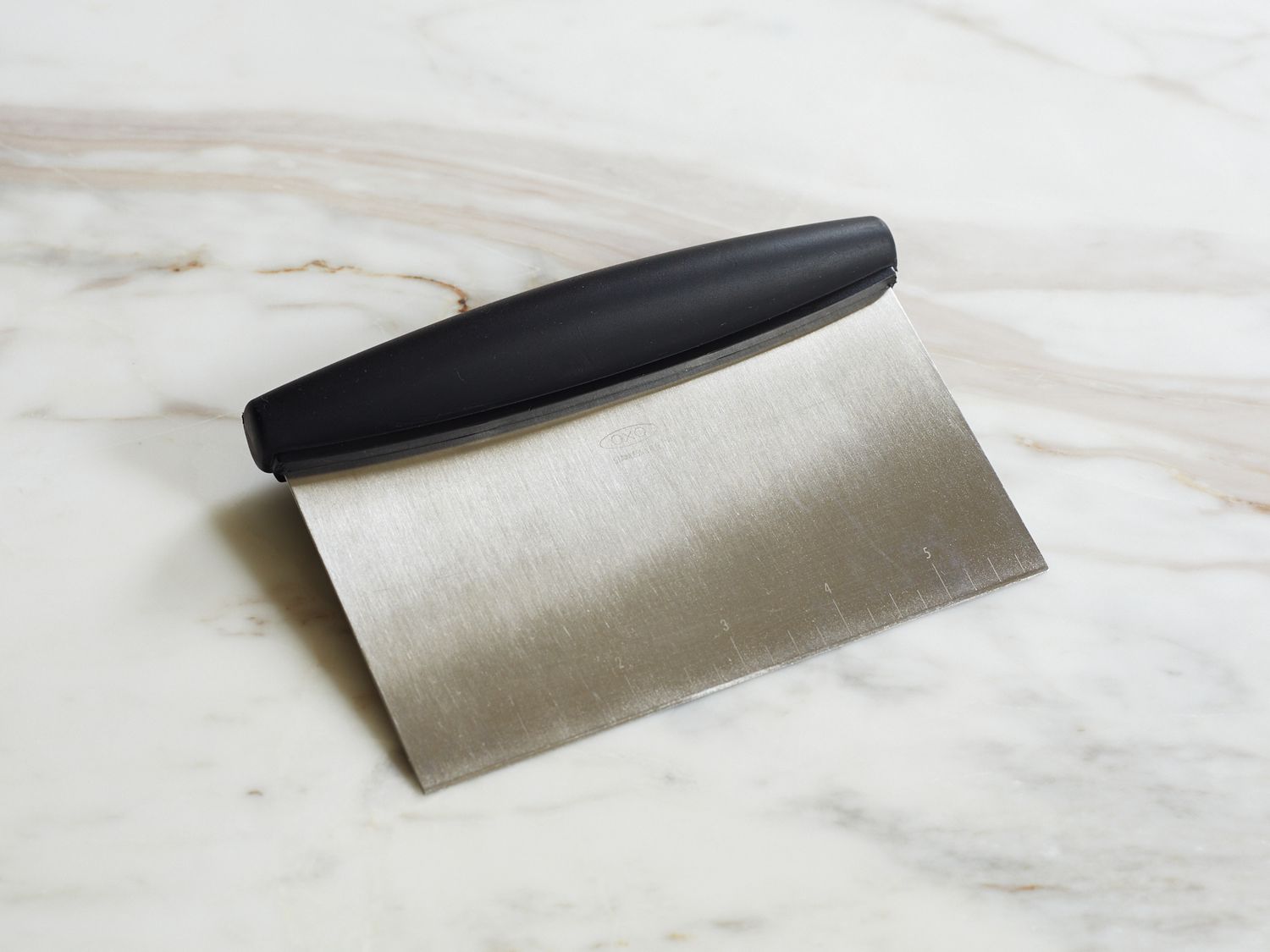
Scraper
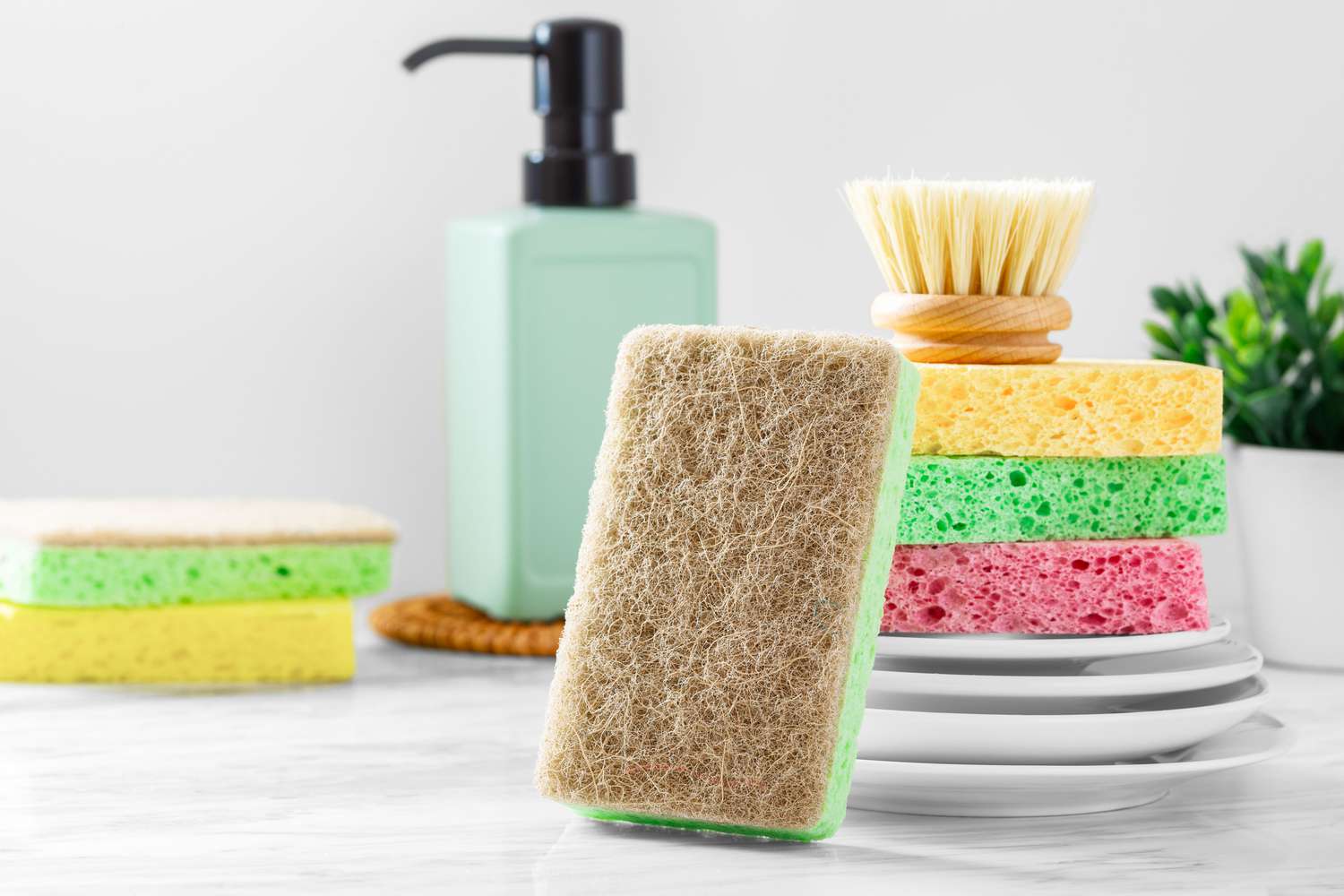
Sponge
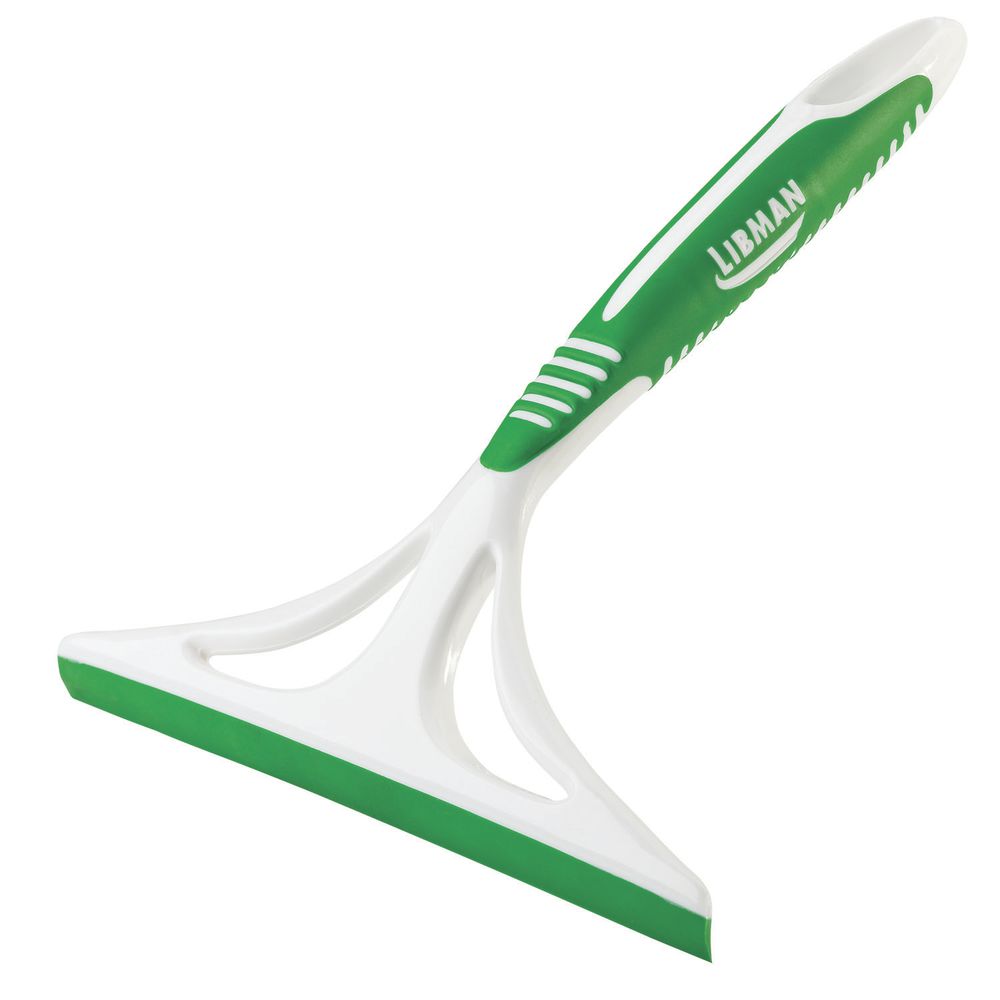
Squeegee
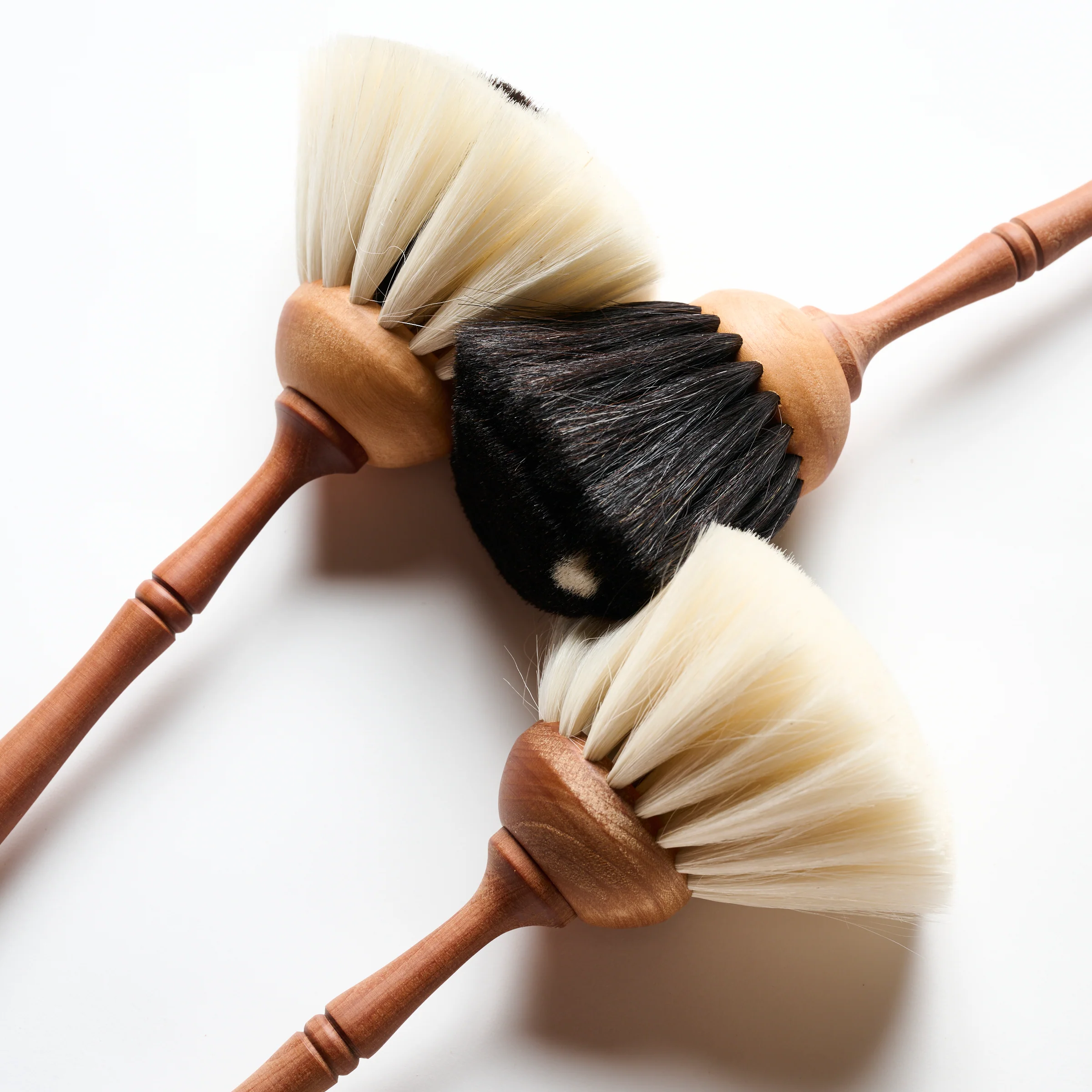
Brush
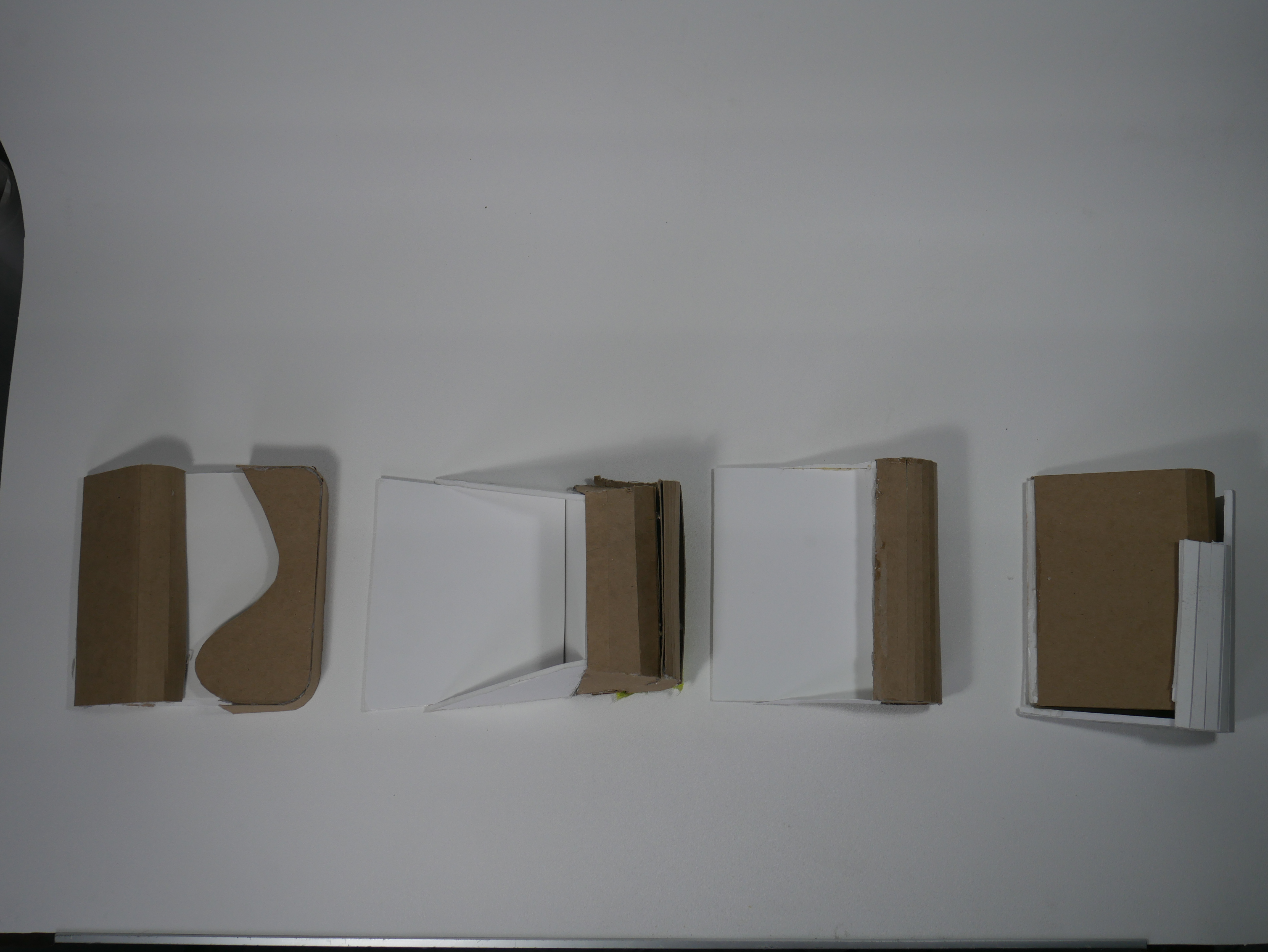
Starting with function, an iterative process of play through rapid prototyping revealed what could be removed, refined, and unified, bringing the system toward a more resolved final form.
First instinct — rough, blocky, no form cohesion. Useful only as a starting point to understand the scale and basic motion of the task.
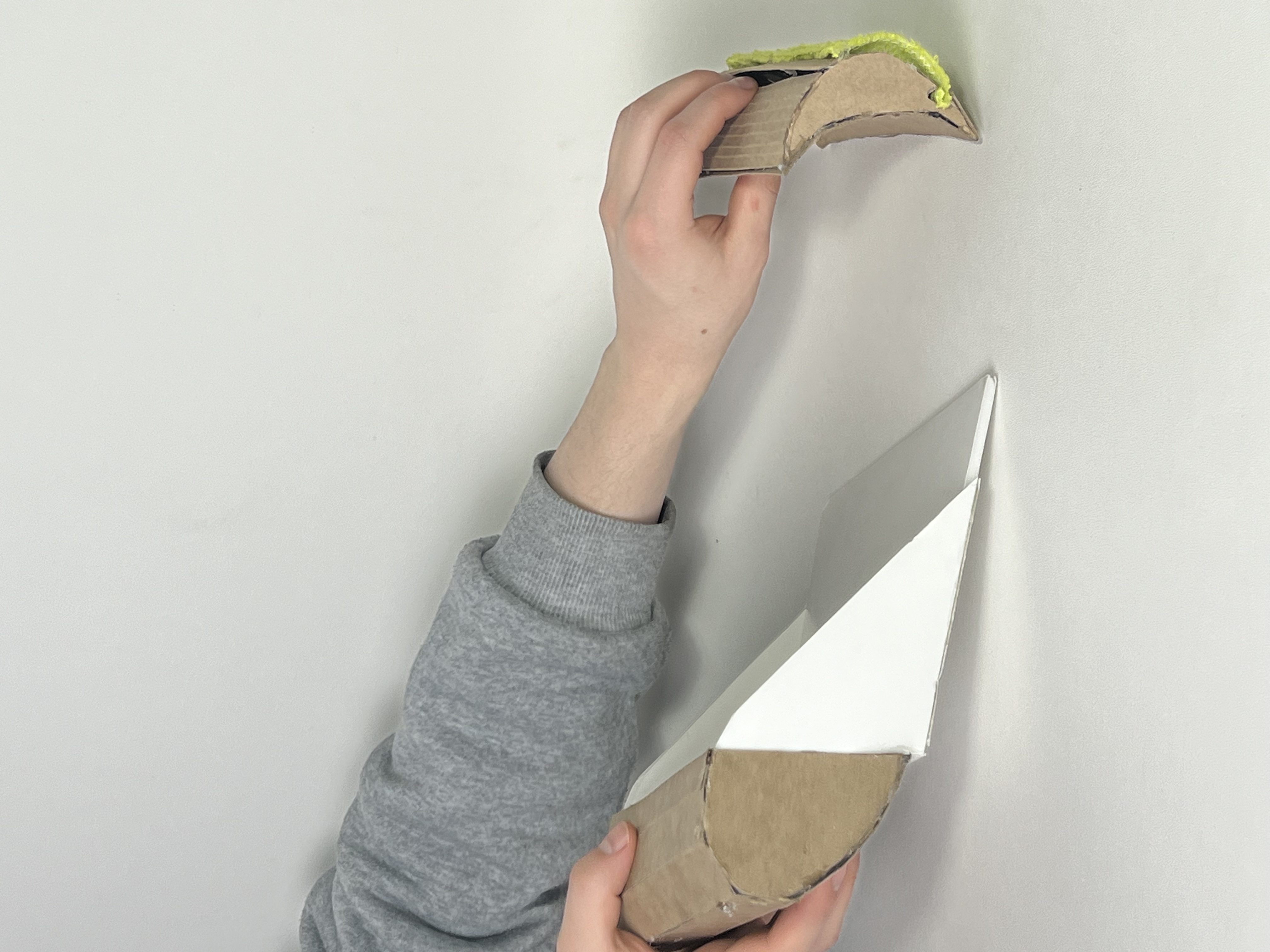
Introduced a curved sweeping edge. The collector still felt like a separate object — no visual or physical relationship between the two parts.
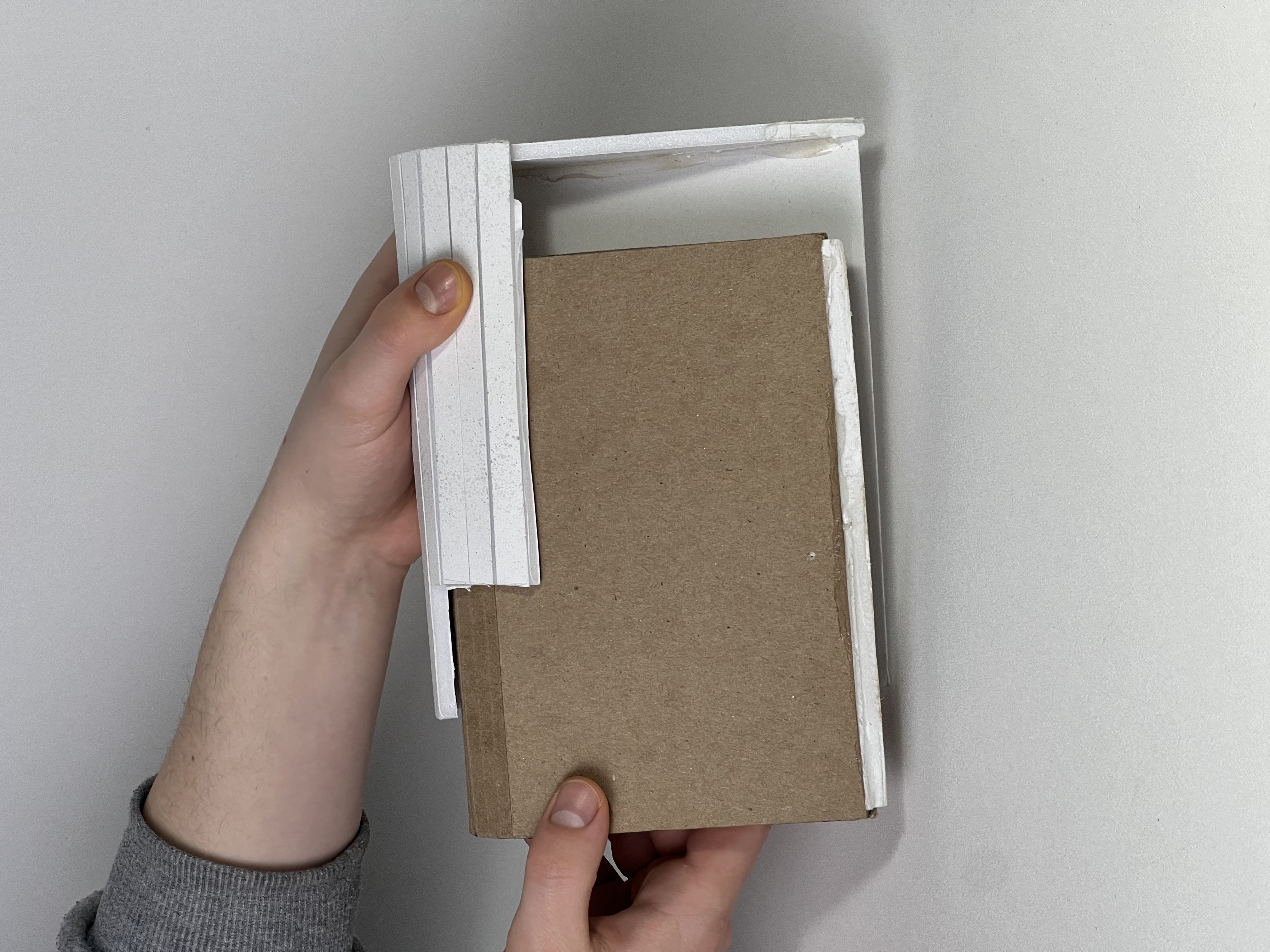
Explored nesting for the first time. The wave curve began to emerge as both the ergonomic and structural logic of the system.
Refined the swoop and tightened the nesting fit. Material contrast between wood handle and PS collector was tested here for the first time.
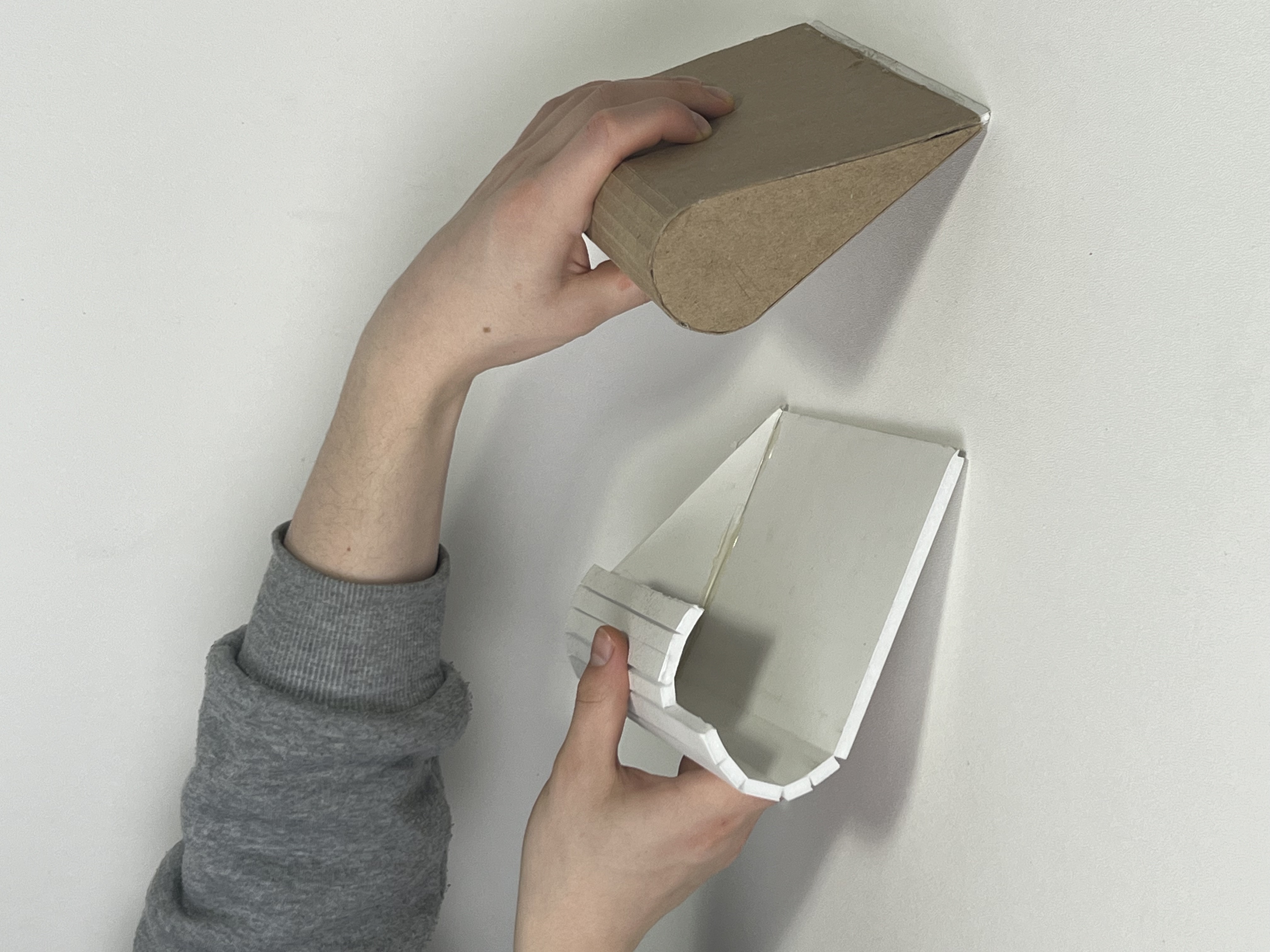
Final resolved form. The wave geometry simultaneously drives the ergonomics, the nesting connection, and the visual identity of the system.

First instinct — rough, blocky, no form cohesion. Useful only as a starting point to understand the scale and basic motion of the task.
Introduced a curved sweeping edge. The collector still felt like a separate object — no visual or physical relationship between the two parts.
Explored nesting for the first time. The wave curve began to emerge as both the ergonomic and structural logic of the system.
Refined the swoop and tightened the nesting fit. Material contrast between wood handle and PS collector was tested here for the first time.
Final resolved form. The wave geometry simultaneously drives the ergonomics, the nesting connection, and the visual identity of the system.
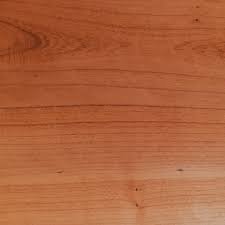
Cherry
Rich, warm reddish tone
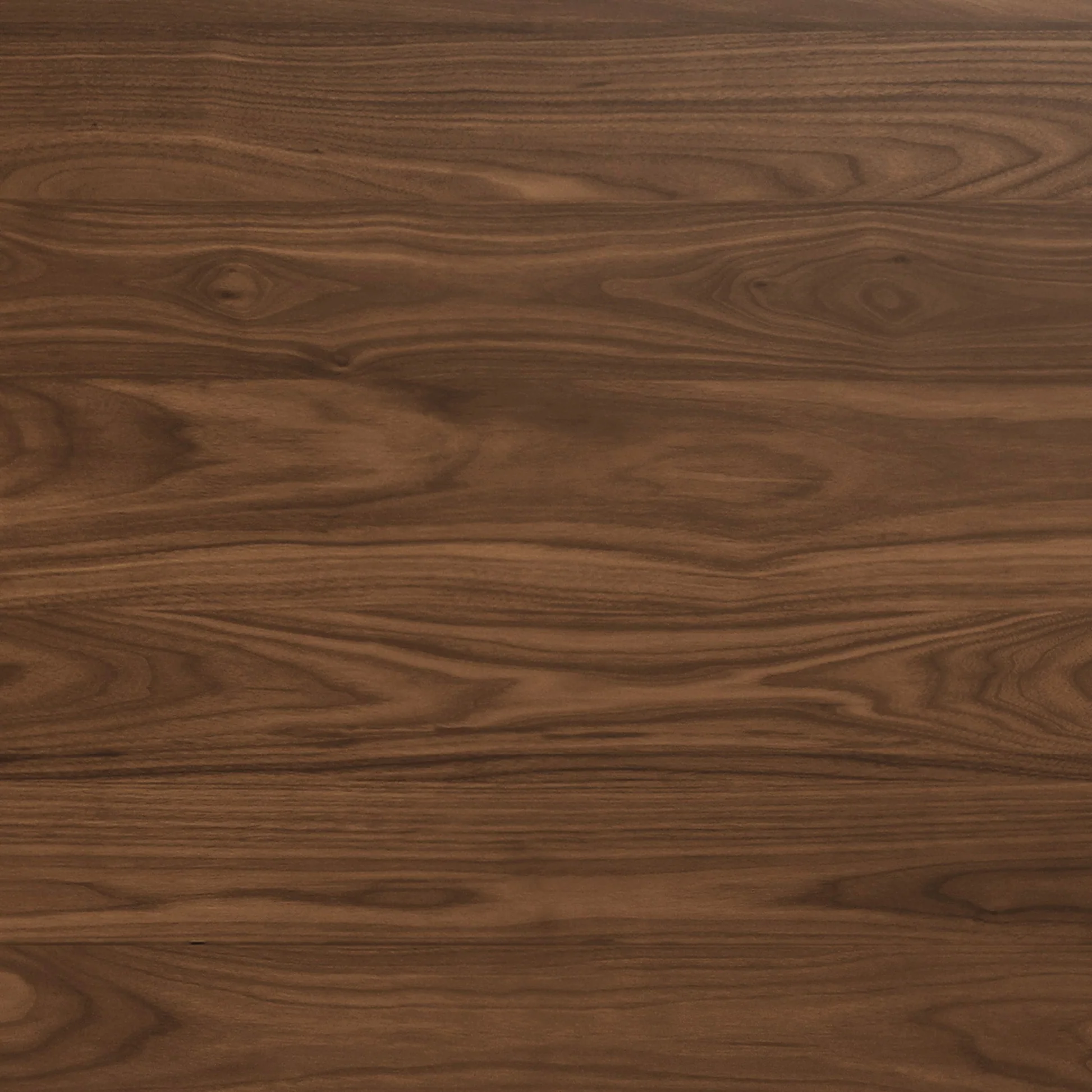
Walnut
Dark, high contrast
Butcher block ✓
Natural, kitchen-native
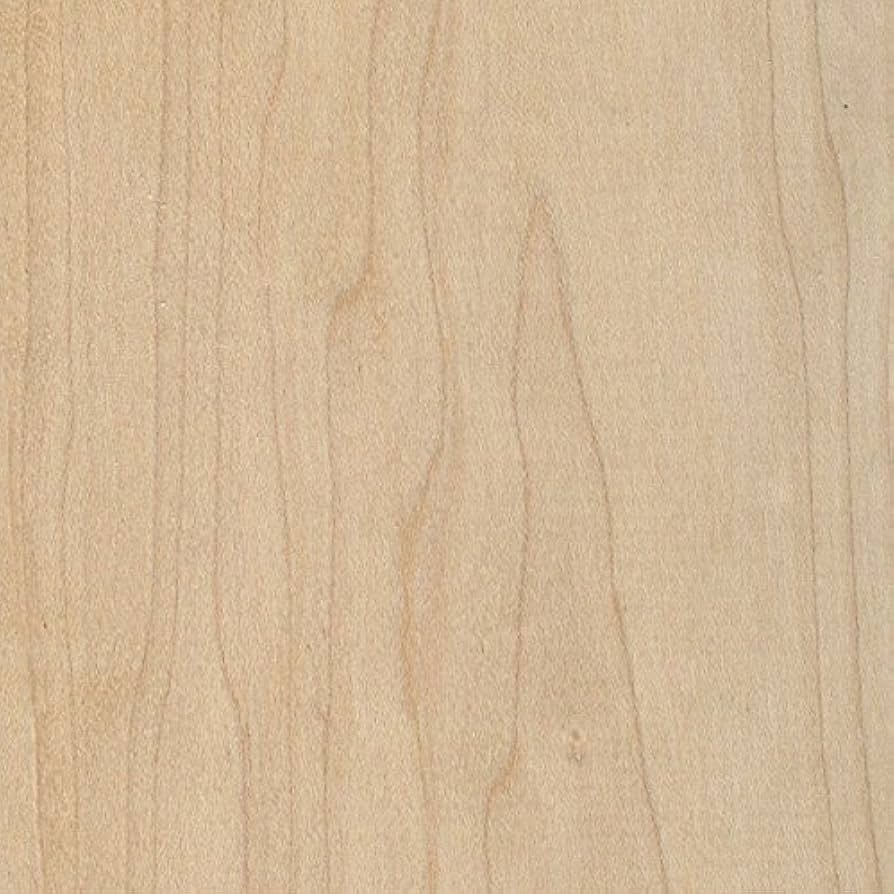
Maple
Pale, subtle grain
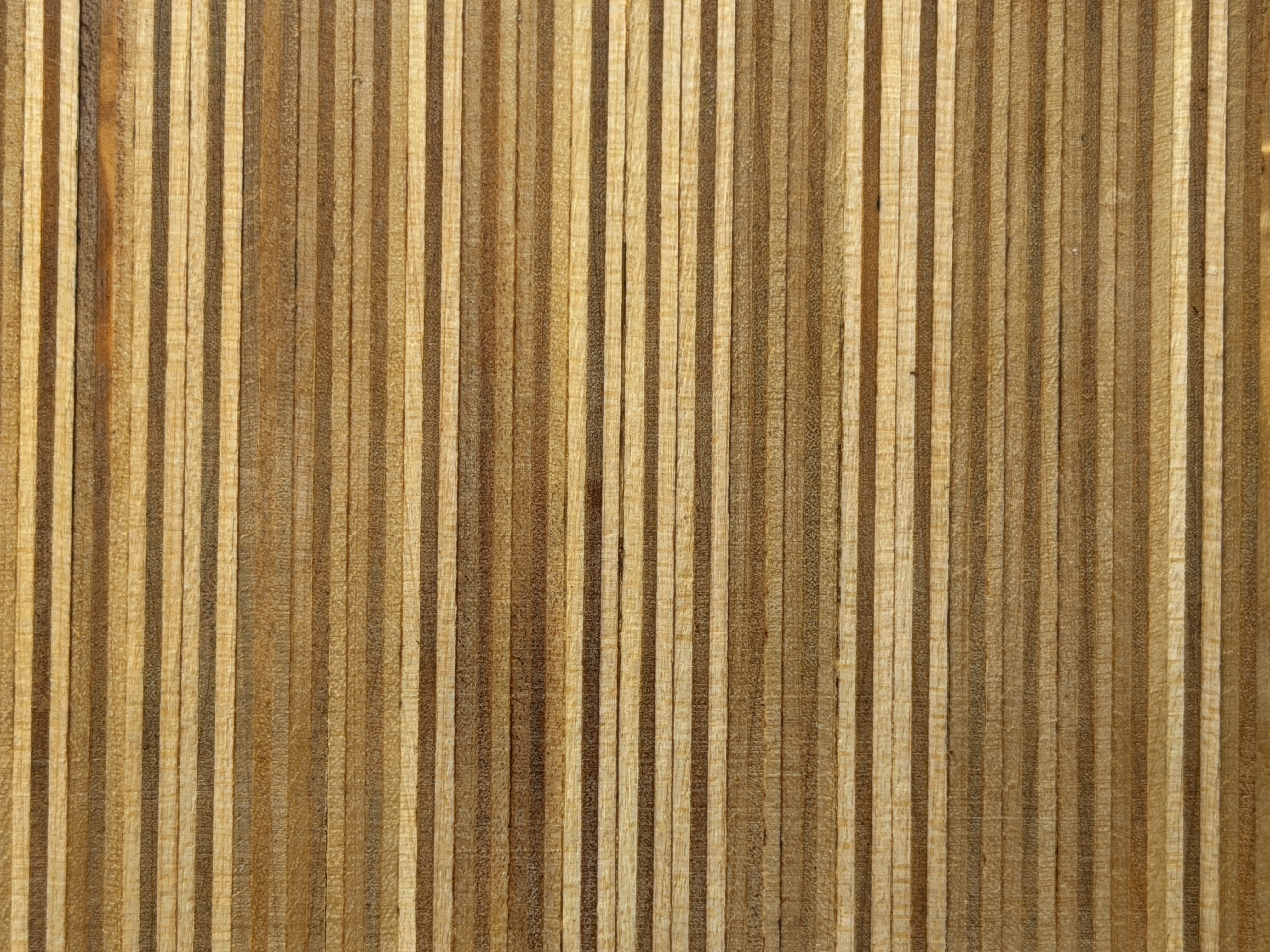
Birch ply butcher block fits the kitchen environment, is affordable to source, contrasts well with the clean white of a polystyrene collector
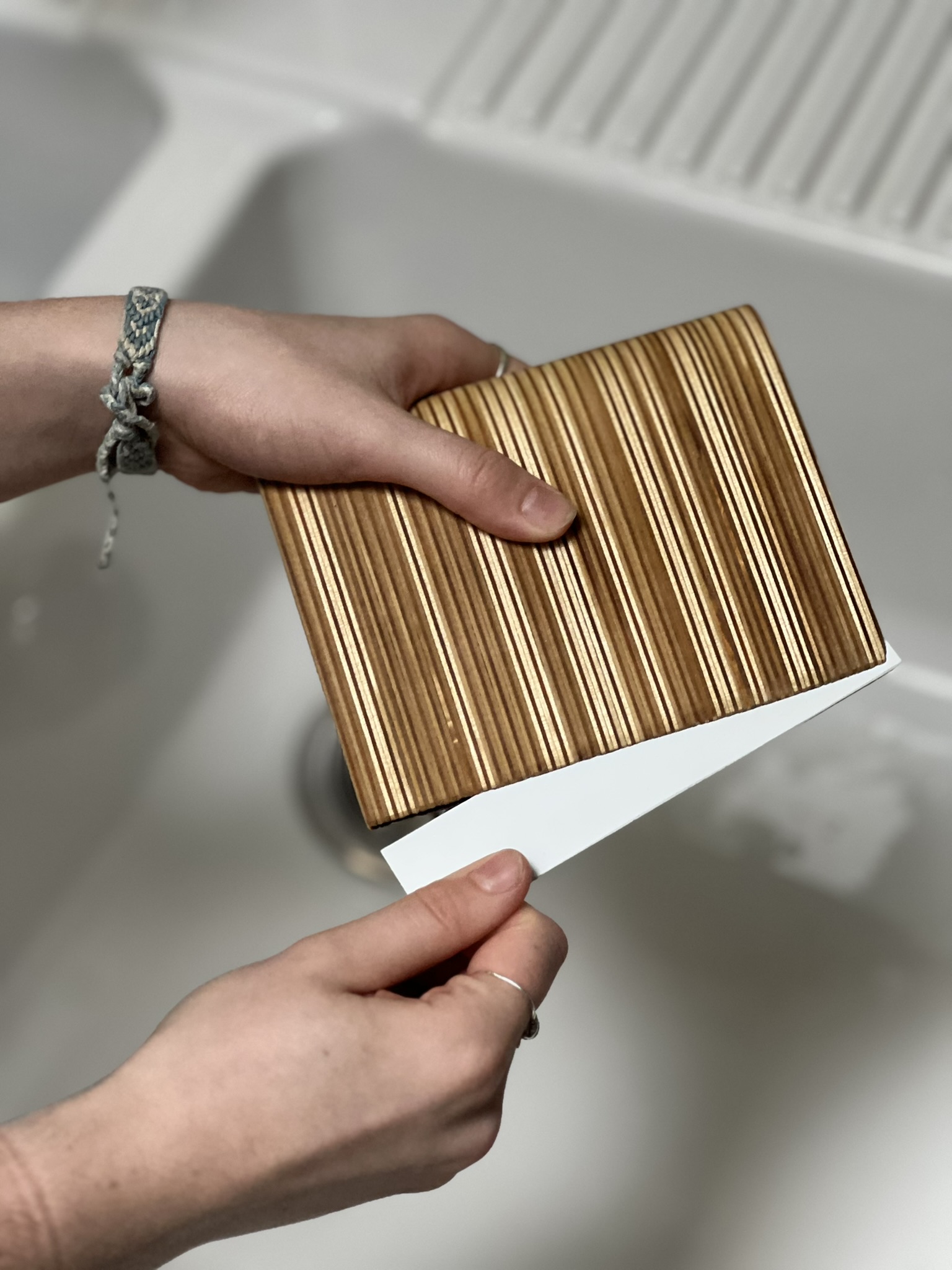
Replace the blade — not the whole product
The scraper blade snaps out and back in. When it dulls, you replace only that part — extending the life of the handle and collector indefinitely.
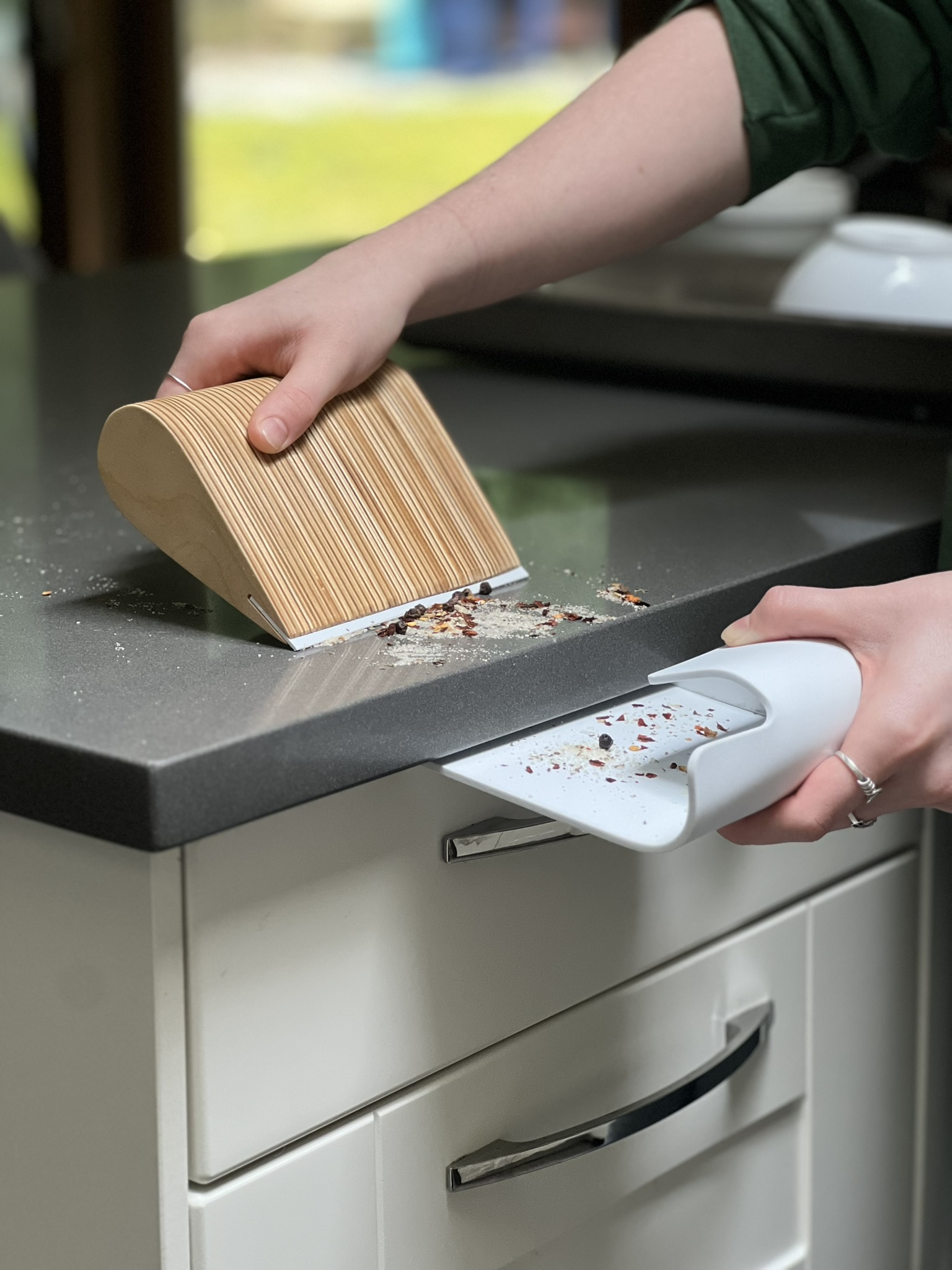
Heavy, ergonomic scraper for stuck-on grime
The swooped handle geometry puts your palm in control. Enough weight to tackle dried debris without needing excessive force.
Easy nesting — they store as one
The scraper tucks into the collector's curve. The Wave form isn't decorative — it's the connection geometry. They sit together and come apart with one hand.
Cut-out slots prevent counter-lip spillage
Slots under the collector lip let it sit flush against a counter edge — debris slides in cleanly without bouncing back onto the surface.
By emphasizing physical sketch models, I let ergonomic validation guide decision making.
This was as much of an exercise of form as it was function. By simplifying the function, I found the form was simultaneously refined.
Hands-on making expanded my understanding of fabrication, from bending polystyrene to refining assembly processes.
With such specific material constraints, I was challenged to balance every aspect of the form. But this constraint also provided structure, freeing me to focus on creativity in gesture and function. With such simplicity in material, every detail needs to be perfect.
Get in touch
Let's work together